Scattering, keeping, or burying ashes
There are several respectful choices for ashes, and the right one is the one that feels meaningful and manageable for your family.
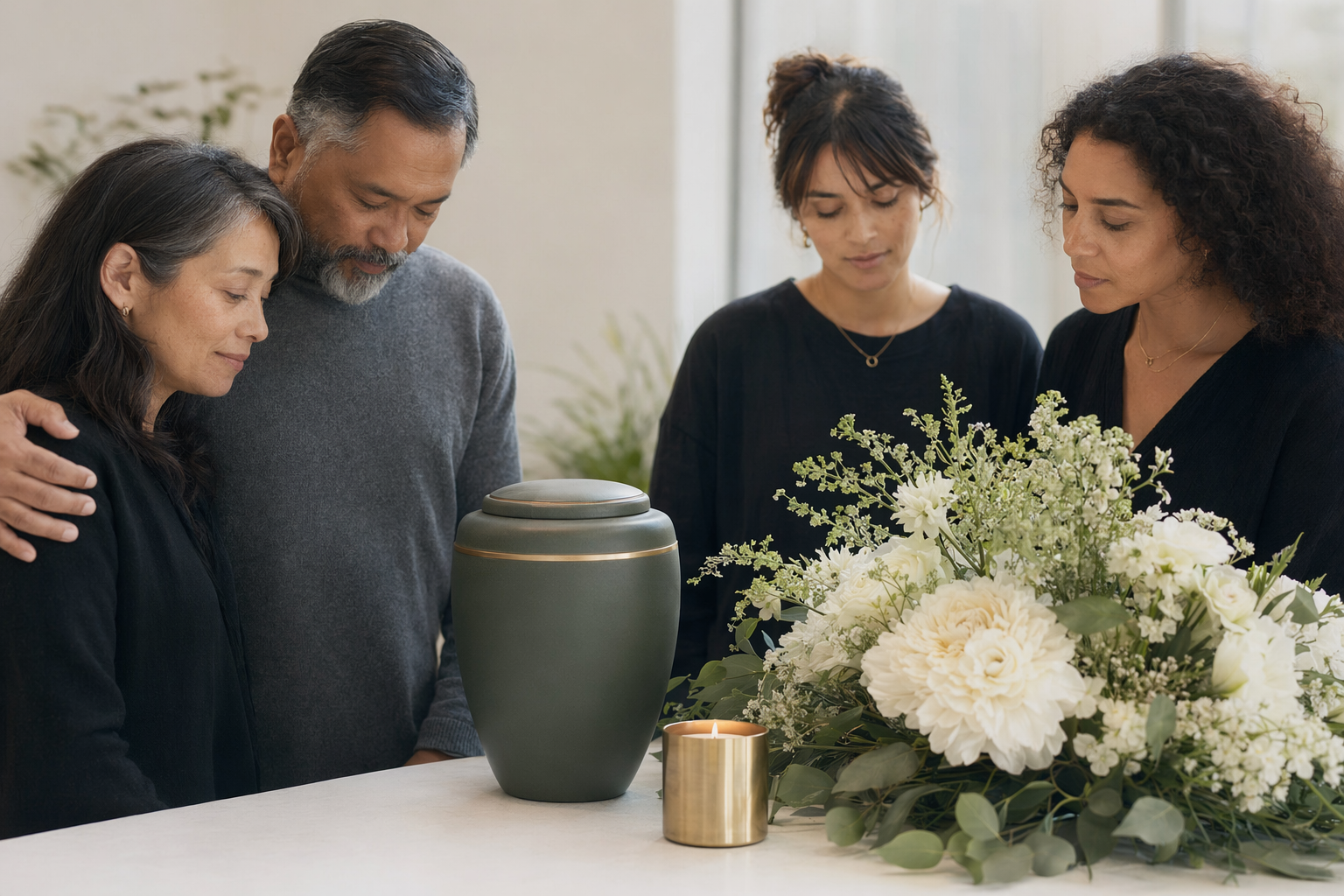
After cremation, some families keep ashes at home. Others scatter them, bury them, place them in a niche, or divide a small amount among relatives. There is no single right choice.
What matters most is understanding the practical rules, the likely costs, and what will feel right over time. Stillpoint is a free matching service, not a funeral home or cremation provider. We share general educational information and can help families connect with licensed providers near them.
In plain language
You do not have to decide right away. You can keep ashes for now and choose scattering, burial, or another memorial later.
A plain-language overview
Ashes are usually returned in a simple temporary container unless you choose something else. From there, families often choose one of a few paths.
- Keep the ashes at home in the temporary container or in an urn
- Scatter the ashes in a meaningful place, where allowed
- Bury the ashes in a cemetery, memorial garden, or family property if local rules allow
- Place the urn in a columbarium niche
- Divide a small portion into keepsake urns or memorial jewelry
You can also combine choices. For example, a family may keep some ashes, scatter some later, and bury the rest in a cemetery. Many people take time before deciding. That is common and acceptable.
- Ashes can often be transferred later to a different urn or keepsake item.
- If family members disagree, it may help to pause and choose a temporary container while you talk.
What to know before you choose
The main questions are emotional, practical, and legal.
First, think about what will be easiest for the people closest to the person who died. A choice that seems meaningful today should also feel manageable later. If one person will be responsible for the urn, scattering trip, or cemetery visits, their needs matter too.
Second, ask about rules before making plans. Scattering is not allowed everywhere, and private property needs the owner's permission. Public parks, beaches, lakes, and federal lands may have their own rules. Water scattering may be regulated by state or federal agencies. A funeral home or cremation provider may be able to explain local practices, but you should still confirm the current rules yourself.
Third, ask for prices in writing. If you are considering an urn, niche, burial space, or memorial jewelry, request the provider's itemized General Price List. Under the FTC Funeral Rule, you have the right to get an itemized GPL, buy only the goods and services you want, use a casket or urn bought elsewhere, and decline embalming where it is not legally required. Embalming is rarely required by law. Learn more about these protections at funeral consumer rights.
Prices vary widely by location and provider. These are typical ranges, not quotes. Confirm all costs in writing and verify that any provider is licensed in your state.
- If you want to scatter on private land, get permission first.
- If you plan burial or niche placement, ask about opening and closing fees, perpetual care, and marker rules.
Step by step: how families often decide
- Start with time. If you are unsure, it is usually fine to keep the ashes in a temporary container while the family thinks.
- Check whether the person who died left instructions. A will, pre-planning papers, or notes may give guidance, though state law may affect who has authority to decide.
- Talk with close family early. If several people want different things, consider a combined approach.
- Choose the type of memorial. Keeping, scattering, burying, niche placement, or small keepsakes all serve different needs.
- Confirm the rules for the place you have in mind. Ask the land owner, cemetery, church, or public agency directly.
- Ask for prices in writing. Request the GPL and any separate cemetery or columbarium price list.
- Verify the provider is licensed in your state.
- If you are scattering, plan a simple, safe gathering. If you are burying or placing the urn in a niche, ask what paperwork or scheduling is needed.
Some families find it helpful to separate the practical choice from the remembrance. You might handle the ashes one way and hold the memorial service another way. The two do not have to happen on the same day. More guidance may help in cremation or memorial and celebration of life.
- A delayed decision is still a decision. You can choose later.
- A brief written family agreement can prevent confusion.
Common options, costs, and tradeoffs
Keeping ashes at home is often the lowest-cost option. If you use the temporary container, there may be no added cost. Decorative urns often range from about $50 to several hundred dollars, and some are more. Keepsake urns and memorial jewelry can range from about $30 to several hundred dollars depending on the material and design.
Scattering can cost little if you choose a permitted place and do it yourself. Costs may rise if travel is involved or if you hire a boat service or scattering service. Water scattering services may range from a few hundred dollars to much more depending on location and whether family attends.
Burying ashes in a cemetery can involve several separate charges: the urn, the plot or cremation garden space, the opening and closing fee, and sometimes a marker or plaque. In some areas, the total may be a few hundred dollars. In others, it may be several thousand.
A columbarium niche also varies widely. Some niches are modestly priced. Others, especially in high-cost areas or indoor memorial buildings, can be much more. Ask whether the quoted amount includes inscription, placement, and future fees.
If you are comparing providers, remember that Stillpoint does not sell urns or arrange cremations. We are a free matching service that can help families connect with licensed funeral homes and cremation providers. For a broader look at expenses, see funeral and cremation costs.
- Typical ranges are not quotes.
- Ask whether an urn vault or outer container is required for cemetery burial.
Choosing what feels right
There is no rule that says ashes must be handled in one specific way. A simple choice can still be deeply respectful.
Some families prefer keeping ashes nearby. It can bring comfort, especially in the first year. Others feel more at peace returning the ashes to nature or placing them in a permanent cemetery setting. Some want a place to visit. Others do not.
If children are involved, plain and gentle language often helps. You can explain that the ashes are what remains after cremation, and that the family is choosing a respectful place or container to remember the person.
If there is tension in the family, try to focus on values rather than objects. Ask questions like:
- Do we want a place to visit
- Do we want something private or something shared
- Do we want a choice that is simple to care for over time
- Did our loved one say what they wanted
When planning ahead for yourself, it can help to write down your wishes and tell the person most likely to carry them out. Pre-planning can reduce stress for family, but it is wise to review details carefully. Pre-need funeral contracts and final-expense insurance are different products. Ask whether funds are protected, and remember that insurance is sold by a licensed agent. Stillpoint does not sell either.
- A meaningful choice does not have to be expensive.
- Written wishes can guide your family, though legal authority depends on state law.
When you want help finding a provider
If you need help understanding local options, ask providers practical questions.
- Are you licensed in this state
- Can you give me your itemized General Price List
- What container is included after cremation
- Do you offer urns, keepsake items, or transfer of ashes into a different container
- Can you explain local options for scattering, burial, or niche placement
- What fees are charged by the cemetery or columbarium, and which are separate from your charges
Stillpoint is not a funeral home, crematory, cemetery, funeral director, or insurance seller. We do not perform cremations or arrange services. We are a free matching service that helps families understand their choices and connect with licensed providers near them. If that would be helpful, you can see how matching works or get matched.
- Ask for all charges in writing before you decide.
- Keep copies of receipts, permits, and any written permissions for scattering or burial.
Always use a licensed funeral home or cremation provider, and confirm every price in writing before you agree.